How Energy Storage Is Propelling America in the AI Race
“AI infrastructure companies, they’re facing grid interconnection queues that can be 5-7 years long, which is really untenable when their competitors are getting to move at startup’s pace. They need the power now; they don’t need it in half a decade.”
Claire McConnell, Redwood Materials
Redwood Materials was founded in 2017 to help the United States secure supply chains for the materials needed to achieve energy dominance. Today, Redwood receives 20 gigawatt hours (GWh) of batteries for recycling.
Recently, the company started Redwood Energy in response to the company receiving used but still serviceable electric vehicle (EV) battery packs. These battery packs can still be used as stationary energy storage at a time that energy demand is rising quickly. In addition to employing a circular economy model with these recycled and repurposed batteries, Redwood’s energy storage solutions are often more affordable, faster to deploy, and domestically sourced compared to their conventional competitors.
McConnell explains that the key obstacle to making second-life energy storage mainstream is the fact that not all EV batteries are the same; they each have different chemistries, voltages, and ages, making them hard to put together and operate in the same unit. Redwood has created a safe system to resolve this.
McConnell notes that the company is receiving a lot of interest from AI companies hungry to bring power online, but the technology can also wider serve renewable installations, industrial facilities, and the electric grid. She says that three things are coming up in her conversations with large energy buyers: 1) speed-to-deployment, 2) 24/7 reliability, and 3) long-term stability of costs and supply chains.
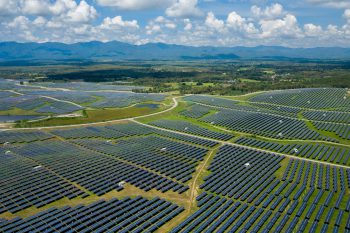
One of Redwood’s showcase projects is a fully off-grid solar + storage co-located installation serving an AI data center run by Crusoe. The installation went from ground clearing to full operation in less than four months and is the largest second-life battery storage system in the world. This model of powering data centers is not only more sustainable but can also directly address many of the concerns that communities have about data centers building and consuming energy in their neighborhoods.
In order to secure battery supply chains, McConnell explains that Redwood has partnerships with a wide variety of battery suppliers, from automakers to other electronics like computers and cell phones.
Looking to the future, McConnell notes that Redwood is projecting to quadruple its supply and produce tens of gigawatt hours’ worth of storage capacity. The company is already planning newer and larger projects both in AI markets and elsewhere. Those looking to learn more about Redwood’s work can visit their website.
From in-depth interviews with industry leaders to insightful discussions on the rapid growth of solar and storage in the United States, Good Energy connects you with the heartbeat of the solar industry. Whether you’re a seasoned professional or just curious about the future of energy, tune in to stay informed and inspired about the bright future of solar. Listen to full episodes on YouTube, Spotify, and Apple Podcasts.


special guest
Claire McConnell
Vice President of Business Development
Redwood Materials
Claire McConnell serves as the Vice President of Business Development at Redwood Materials since November 2025, following an extensive career at Proterra where roles included Chief Business Officer and Vice President of Strategic Partnerships. Prior to Proterra, Claire held multiple positions at Bidgely, Tesla, McKinsey & Company, and Merrill Lynch, focusing primarily on business development, operations, and finance. Claire earned a Bachelor of Science in Economics and Political Science from Duke University and a Master of Business Administration from Stanford University Graduate School of Business.
good energy
Meet Our Podcast Hosts


podcast
All Resources ->Watch More Good Energy






related content
You May Also Like