Energy Storage Expert Answers Your Questions
Emily Burlinghaus, Director of Energy Storage Manufacturing & Supply Chain at SEIA, answers frequently asked questions about battery energy storage systems (BESS), a rapidly growing segment of America’s energy industry that is helping boost reliability and maximize the grid’s supply of low-cost, fuel-free energy.
Energy Storage FAQs
Q: What is energy storage?
A: Energy storage captures electricity from the grid or generation assets (like solar panels) to be dispatched later. This is critical for grid efficiency, allowing the grid and individual users to store power when generation is high and prices are low, and release it during periods of peak demand when energy is more expensive.
Q: Where are batteries made?
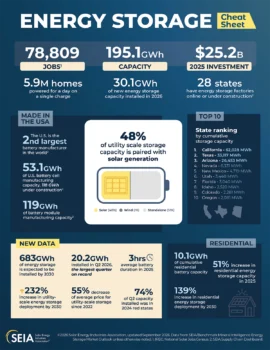
A: Battery manufacturing is a global industry, but production—including cell manufacturing, pack assembly, and full containerized storage systems—is growing significantly within the United States to support grid, residential, and electric vehicle applications. Learn more about the growing storage supply chain.
Q: What is the lifespan of a battery?
A: Most batteries now last at least 15 years. Ongoing research and development are focused on alternative chemistries and innovations in lithium-ion technology to extend these lifecycles further.
Q: How does a home battery work in a power outage?
A: Thanks to battery management systems that monitor the grid, when a power outage occurs, home batteries automatically switch to “island mode.” This allows the home to still utilize electricity even if its neighbors are in the dark.
Q: Will energy storage save me money?
A: Yes! Battery costs have dropped over 80% over the last decade and continue to become even more affordable at both utility and residential scales. Homeowners can save on electricity bills by relying on stored energy during peak-load hours instead of purchasing expensive power from the grid.
Q: Are batteries bad for the environment?
A: When paired with solar, storage is a zero-emission resource. Additionally, states and localities have rigorous safety regulations and decommissioning requirements that ensure the battery and all its materials are handled properly throughout its lifecycle.
Q: How does energy storage make the grid more reliable?
A: Storage mitigates the risk of rolling blackouts and outages during extreme weather. Just look at Texas: while the state had previously requested residents to reduce electricity usage during extreme heat, the expansion of grid-scale energy storage in 2024 and 2025 meant the state did not have to issue conservation notices during heatwaves.
Conclusion
Energy storage serves as a fundamental pillar for stable, cost-effective, and secure power for utilities and homeowners alike. As battery supply chains and manufacturing continue to onshore to the United States, its role in America’s economy and energy landscape is expanding every day.
Curious to learn more? Get the latest data and learn more about SEIA’s work advocating for the grid’s most valuable asset.
related content
You May Also Like